Temples of Phuket
About this tour
In short
Phuket has an unusual range of temples: small, quiet ones that feel genuinely reverent, and large complexes built on a scale that is hard to take in at once. Each has its own history, and some go back centuries. This trip takes in the most interesting of them.
The Big Buddha
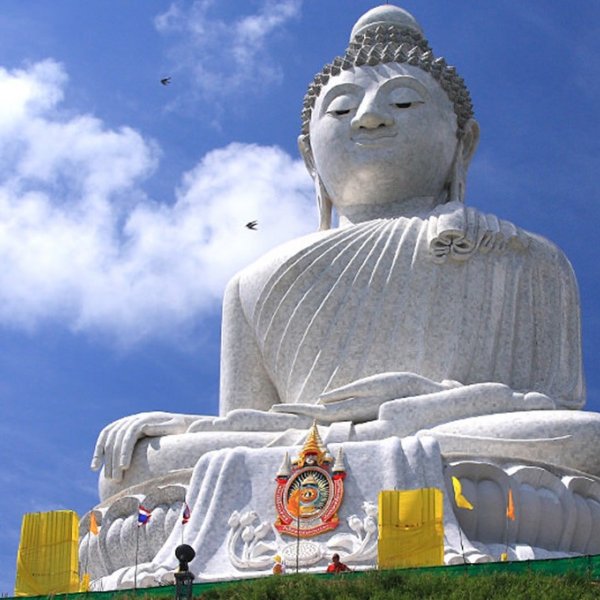
The Big Buddha is among the best-known sights not only on Phuket but in Thailand generally. The 45-metre figure, clad in white Burmese marble, sits on top of Nakkerd Hill, over 400 metres above sea level — which is why you can pick it out from much of the island, Karon beach included.
Construction began in 2002 and continues to this day, though the ongoing work does nothing to spoil the view. From the terraces around the statue the whole southern half of the island lies below you. A monk here can tie a sai sin around your wrist, the thread that stands for luck and for wishes granted.
Wat Chalong
Wat Chalong occupies a large and attractive site and holds royal status; it is generally regarded as the most important temple on Phuket. It was built in the early nineteenth century and dedicated to two revered monks, Luang Pho Chaem and Luang Pho Chuang, who tended the wounded during the tin miners' rebellion of 1876.
The centrepiece is the 62-metre pagoda, painted inside with scenes from the life of the Buddha and containing several chapels and prayer rooms. By tradition it also holds a fragment of bone relic of the Buddha.
The tiered roofs in the traditional Thai style, the gilded exterior and the wide green grounds make this the most photographed stop of the day.
Pud Jor
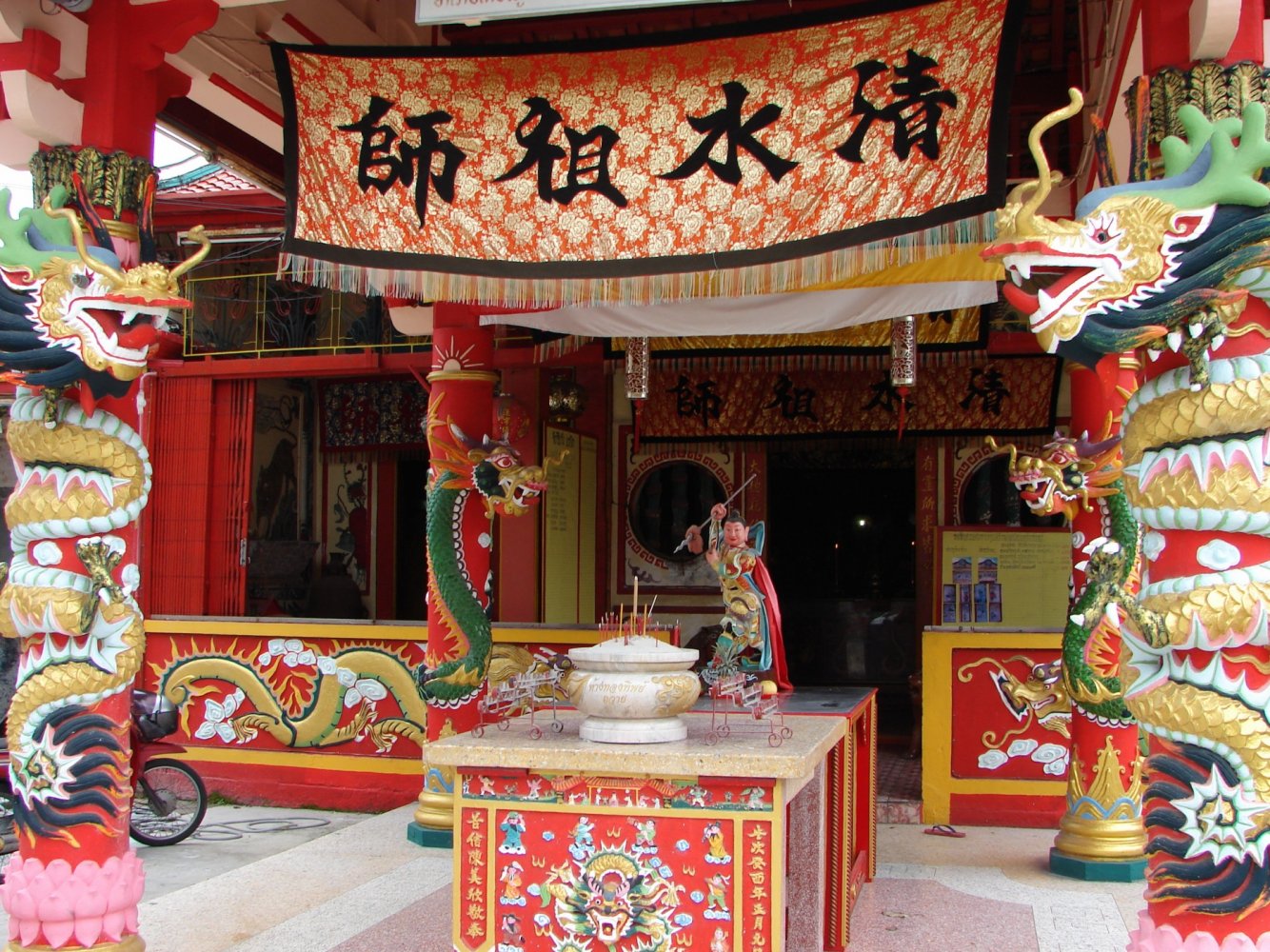
Pud Jor is the oldest Taoist shrine on Phuket, built more than 200 years ago in honour of Kuan Yin, the goddess of mercy. Worshippers come before the statue of the goddess and her guardians not only to pay respect but to ask for good fortune and for their families to be protected from demons.
The larger Jui Tui shrine next door is a later addition. The two stand so close together that at first glance they read as a single complex. Jui Tui was moved here and rebuilt by the congregation after a serious fire.
The architecture of both is markedly different from what you see elsewhere in Thailand — colourful, intricate, and slightly secretive, guarded by black stone warriors at the entrance.
Hok Nguan Kung
Founded roughly a century ago, the Hok Nguan Kung shrine is the religious centre for Phuket's ethnic Chinese community. Its principal object is a sandalwood figure of the deity Ju Su Kong, black from head to foot, set against wall paintings drawn from the classical Twenty-Four Examples of Filial Piety.
Wat Sri Sunthon
Wat Sri Sunthon carries the name of one of the two sisters who led the local resistance against the Burmese. A 30-metre Reclining Buddha lies along the top of the main building, with nine smaller figures in front of the entrance. The grounds are small but vividly decorated: a stone monk and a menagerie of animal statues greet you at the gate.
If you want to visit a Thai Buddhist temple, this is the way to do it. What sets this programme apart is that you spend the day with your own family and friends rather than in a coach group. Both a Russian-speaking and a Thai guide are included, and you travel the island in a modern, comfortable vehicle.
Included in the price
- Car — 4,000 THB
- Minivan — 6,000 THB
What to bring
- A camera
- Temple-appropriate clothing (knees and shoulders covered)
- Cash for personal expenses
Itinerary
| Time | Details |
|---|---|
| 10:00 | Pickup from your hotel |
| 10:30 | The Big Buddha |
| 11:30 | Wat Chalong |
| 12:30 | Hok Nguan Kung, the Chinese shrine in Phuket Town |
| 13:00 | Jui Tui shrine |
| 14:30 | Lunch at a historic restaurant in Phuket Old Town |
| 15:30 | Wat Sri Sunthon, the temple of the Reclining Buddha |
| 16:30 | Return to your hotel |