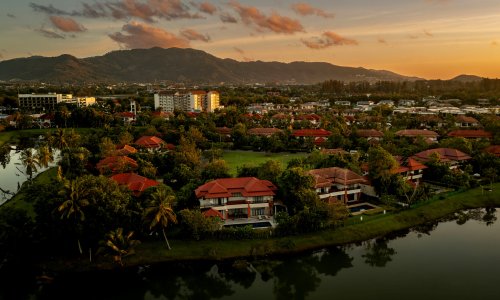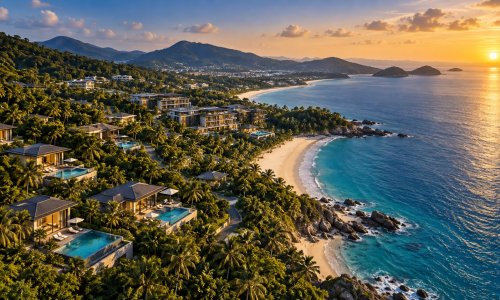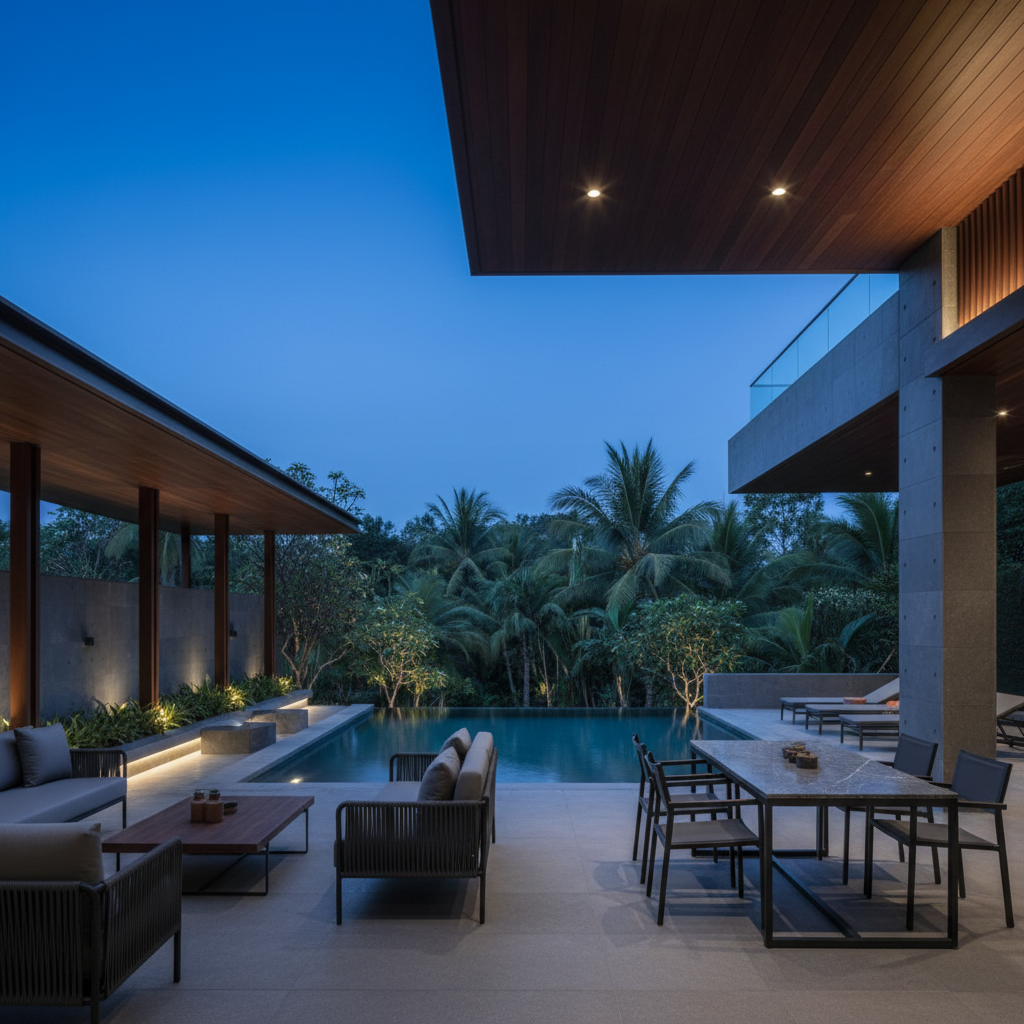

Quick take: Thailand’s 2026 housing market is heading for a 20-year low in new launches — roughly 17,000 new units nationwide. Against that backdrop, Phuket is moving in the opposite direction: high-season sales are up 21% year-on-year, the island has taken the #2 spot in Thailand by value of unsold supply behind Greater Bangkok, and villas — just 7% of units — account for 31% of total market value.
What the data says
Key 2026 market sources: The Nation Thailand — Property market downturn, The Nation Thailand — AssetWise Q1, and the Nation Thailand post on Facebook. All three draw on figures from AREA (Agency for Real Estate Affairs) and public developer disclosures.
Thailand: a 20-year low in launches
According to AREA, total new residential supply across Thailand in 2026 will fall to around 17,000 units — the lowest level in two decades. For context, peak years delivered 100,000+ units a year nationwide.
- Greater Bangkok and its suburbs — the usual engines of supply — are sharply slowing launches.
- Developers are focused on clearing accumulated stock rather than starting new projects.
- Bank lending is tight, and mortgage approval rates for Thai buyers have dropped.
That is the macro backdrop. In a cycle like this, the markets that win are the ones where demand does not depend on domestic mortgages.
Phuket: Thailand’s #2 market and +21% in sales
Set against the national low, Phuket is showing the opposite trajectory:
- +21% YoY in high-season sales (per AssetWise’s Q1 report).
- #2 in Thailand by value of unsold supply — the first time the island has overtaken Pattaya and Chonburi.
- The share of the premium segment (villas and luxury condos) in new launches is significantly above the national average.
The driver is the foreign buyer. Phuket runs on dollar logic, not on Thai mortgage logic. If you’re actively looking at the market, see our catalog: buy property in Phuket.
Villas as a category of their own
The headline number from the AREA Phuket report:
- Villas — 7% of all units on the island.
- Villas — 31% of total market value.
In other words, a single villa sale is equivalent to several condo deals by ticket size. That changes how developers manage inventory: even at a lower transaction count, revenue stays strong. It also explains why the island can “grow” even when the absolute number of deals is below historical peaks.
For buyers considering the lifestyle format, we’ve put together a separate piece: rent a villa as a test before you commit to buying.
What’s changing in the rules for foreign buyers
2026 is not just about market numbers — it’s also about the legal framework. Two initiatives are reshaping demand directly.
Investment Visa from 3 million baht
From 2026, Thailand operates an updated Investment Visa programme with a minimum threshold of 3,000,000 baht (~$85K) — predominantly via condominium purchase. The visa is designed for long-term residence and is renewable as long as the investment is held. Full conditions: FOSR Law — Investment Visa 2026.
Effect on the market: the buyer pool expands to include condo owners with a “live here” horizon, not just “buy as an asset.”
Foreign Land Ownership Act
A bill is on the table that would allow foreign freehold ownership of up to 1 rai (1,600 m²) of land in exchange for investments of 40 million baht or more. If passed, it would be the first such precedent since 1999, breaking the long-standing rule that foreigners cannot own land outright. For the practical details: MORE Group — Phuket Outlook 2026.
Status: still a draft bill, not law. But the very fact of the debate is already shaping institutional buyer expectations.
Where exactly Phuket is growing in 2026
New launches and sales are distributed unevenly across the island. The hot zones:
- Bang Tao / Cherngtalay / Laguna — premium condos and villas, the main inflow of capital.
- Layan / Surin — luxury villas, the ultra-premium tier.
- Rawai / Nai Harn — mid-market villas and condos, the best yield-to-price ratio.
- Kamala — growth driven by new hotel-branded residences.
The east of the island (Phuket Town, Chalong) is growing more slowly but delivers the strongest NET yield for rental strategies — thanks to a lower entry price.
What this means for the buyer and investor
- The window for entry is narrowing. A nationwide low in launches paired with +21% in Phuket are two opposite signals. On the island, demand is being redistributed toward prime stock, and pricing on liquid product is rising faster than the average.
- The premium segment is shielded from the macro cycle. Villas and luxury condos do not rely on Thai mortgage availability. That is a buffer through the 2026–2027 cycle.
- A legal window is opening. The Investment Visa is already live; the Land Ownership Act is a potential catalyst. Anyone entering ahead of a possible passage captures the upside.
- Location is the deciding factor. Bang Tao and Layan — capital gain. Rawai and Phuket Town — cash-flow strategies.
If you’re planning a deal, start with the fundamentals: how a foreigner can buy property in Phuket without hidden risks.
What to do next
InDreams Phuket is a local agency focused on international buyers. We see the market from both sides — as macro analysts and as a front-line deal team. If you’d like us to break down your specific case — area, budget, objectives — get in touch and we’ll build a personalised shortlist from current inventory, adjusted for the 2026 trends.
Sources
- The Nation Thailand — Property market downturn (AREA forecast 2026)
- The Nation Thailand — AssetWise Phuket Q1 results
- Nation Thailand — Phuket #2 unsold value
- FOSR Law — 3M Baht Investment Visa
- MORE Group — Phuket Property Market Outlook 2026
Related insights
A cluster of pieces on the key trends shaping the Phuket market in 2026:
- ▸AssetWise Phuket: sales +21% YoY in Q1 2026A local developer is growing while Thailand’s overall market contracts — what this means for buyers.
- ▸Investment Visa of 3 million baht for condo buyersHow to secure a long-term Thailand visa through a property purchase from $85K.
- ▸Foreign Land Ownership Act: up to 1 raiThe draft Foreign Land Ownership Act — for the first time since 1999, foreigners may be allowed to own land outright.